



A customer pushes a shopping cart with cases of Coca Cola outside a Walmart Supercenter retail store in North Bergen, New Jersey, U.S., Nov. 21, 2025.
Mike Segar | Reuters
One word keeps appearing in third-quarter earnings reports: “resilient.”
That’s the early read on U.S. consumers from various companies that released their results this week. Many businesses say Americans are still spending despite inflationary pressures, though not every company has enjoyed the same success.
The commentary comes amid fears that diesel fuel prices, which hit an all-time high of $6.52 per gallon in September, would drive up prices on consumer products. Economists also worried that more expensive regular gas, combined with high borrowing costs and continued tension between the U.S. and Iran, would spur a pullback in consumer spending.
Retail sales rose 0.8% in September, following a jump of 1.3% in August. Sales in September were boosted by rising gas station spending. Despite all those challenges, some corporate executives say the headwinds aren’t yet affecting sales.
While retail sales rose 0.8% in September, following a jump of 1.3% in August, the September came as gas station spending jumped. Despite all those challenges, some corporate executives say the headwinds aren’t yet affecting sales.
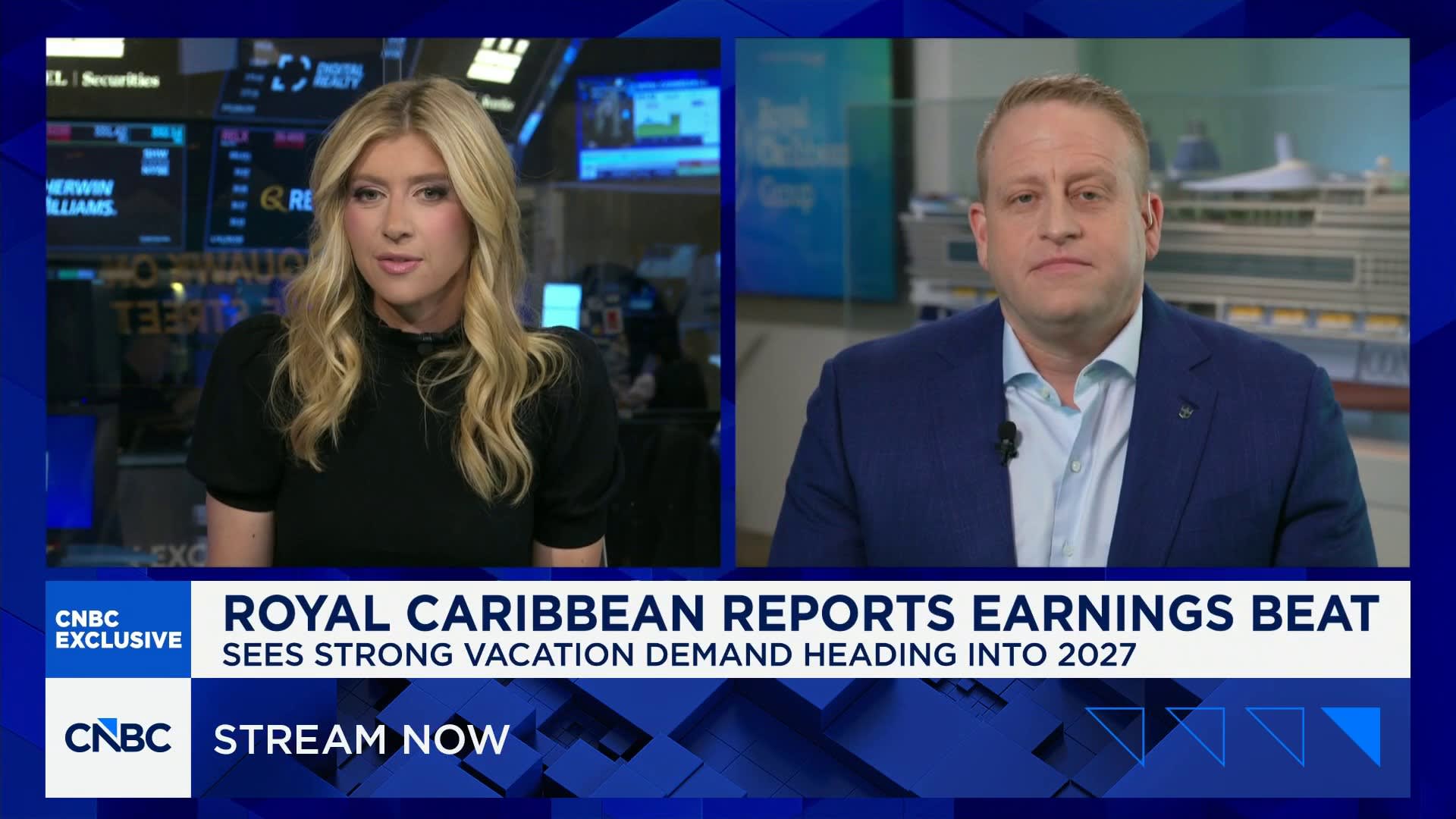
“There’s been a lot of noise in the market this year. There’s a lot of geopolitical stuff,” Royal Caribbean Chairman and CEO Jason Liberty said on the company’s earnings call on Tuesday. “But I look at our business [and our results], and I think that really talks to the resilience of the business, the resilience of the consumer.”
Royal Caribbean reported an increase in bookings during its third quarter, while Sherwin-Williams’s CEO said the quarter was evidence of the company’s strength.
Here’s how companies are reading the consumer in the most recent three-month period:
Coca-Cola
The food and beverage company beat analysts’ expectations for third-quarter earnings and revenue despite what CEO Henrique Braun called an “uneven environment.”
Coca-Cola reported that North America unit case volume was flat, indicating demand was steady in the face of higher prices. The company’s overall unit case volume was helped by higher demand outside of North America.
“The underlying momentum remains quite strong,” CFO John Murphy told CNBC. “Consumer sentiment is largely unchanged in the sense that, wherever you are on the income scale, you’re looking for value, and I think our system here has done a good job interpreting that.”
The company increased its full-year forecast and now expects its comparable earnings per share to grow at least 11%, up from a prior forecast of growth between 9% and 10%.
Royal Caribbean
The cruise company beat Wall Street’s expectations for earnings per share and narrowly missed on revenue.
“Our third quarter results reflect continued strong consumer demand for our vacation experiences and the accelerated momentum across our industry leading brands,” CEO Liberty said in the release.
The company reported that the number of guests served in the third quarter increased 9% year over year to 2.7 million vacationers and said booking volumes for 2027 were already “up in the high teens,” pacing ahead of historical levels and indicating high travel demand.
“It’s not that we don’t see points of challenges, but really what we’ve seen is that even in those points of challenges, the consumer comes roaring back as relates to the vacation experiences,” Liberty told CNBC’s “Squawk on the Street” following the report.
Royal Caribbean shares rose over 8% in Tuesday trading.

Sherwin-Williams
Sherwin-Williams beat analysts’ expectations for revenue but fell short of expected earnings per share.
Sherwin-Williams CEO Heidi Petz said in the company’s earnings release that the paint retailer’s performance demonstrated “the resilience of our Company and the strength of our strategy in a challenging demand environment.”
“Despite muted underlying market volumes, we continued to win new customers, increase share-of-wallet and deliver sales growth across all three reportable segments,” she said.
Net sales increased 7.9% from the same period last year. The company attributed the gain to higher selling prices, but the benefits to profits were partially offset by increased costs of raw materials and supply-chain related expenses.
And the company maintained full-year guidance, saying “customer sentiment and the leading indicators we track point to muted demand over the remainder of the year and into 2027.”
UPS
A worker drives a United Parcel Service (UPS) truck on Oct. 28, 2025 in Los Angeles, California.
Mario Tama | Getty Images
UPS beat Wall Street expectations for both earnings per share and revenue in the third quarter.
Revenue in the U.S. rose 4.5% during the period to $14.86 billion.
CEO Carol Tomé told investors on the company’s earnings call that consumers remain “resilient” ahead of the holiday season, the company’s busiest period. She said the company expects that average daily shipping volume will grow next quarter at a rate consistent with last year. However, fourth-quarter domestic average daily volume will likely fall due to reducing deliveries with Amazon, she said.
UPS has been in the midst of unwinding its partnership with Amazon at the same time it’s executing a broad turnaround effort to operate more leanly.
The company raised its full-year forecast for the second quarter in a row, projecting consolidated revenue of approximately $92.6 billion, up from its previous expectations of $91.2 billion.
Shares rose more than 4% in Tuesday trading.
Whirlpool
Not every company is seeing the same spending trends, however.
Appliance maker Whirlpool missed on both the top and bottom lines for its third quarter and cut its full-year revenue guidance.
Net sales in North America fell more than 8% year over year during the period ending on Sept. 30.
Even still, the company cited its own read on “resilience.”
“Through disciplined working capital management, we are protecting our year end free cash flow and
our balance sheet resilience to navigate challenging market conditions,” CFO Roxanne Warner said in the earnings release.
Shares were down nearly 1% in Tuesday trading.
— CNBC’s Amelia Lucas and Laya Neelakandan contributed to this report.

