


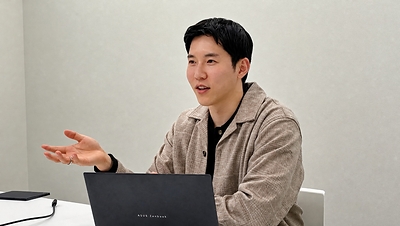

SEOUL, South Korea, Nov. 9, 2026 /PRNewswire/ — Competition among K-beauty brands keeps intensifying. Kim Jung-hoon, CEO of Koround (https://koround.com), has chosen a strategy of catching consumers’ eyes first and keeping them with proven efficacy. The company is targeting Southeast Asia with DECORE, its clean-beauty skincare brand, using halal and vegan certifications as its edge.

Jung-Hoon Kim CEO of Koround
Kim previously led digital marketing strategy at Google Korea and strategy and sales planning at eBay Korea. While designing how products sell online, he consulted for many brands and came to see the growth potential of beauty. “Korean products are good enough to compete anywhere in the world, but I judged that K-beauty still hadn’t reached many large markets,” he said. He founded Koround in February 2024 and launched DECORE in July 2025.
He built his team around experts in online sales. Chief Marketing Officer Choi Hyun-jin was a digital marketing strategist at Google and handled brand and performance marketing at eBay. Performance marketing lead Kim Sun-woo worked on ad optimization and creator partnerships at Google, AB InBev and Sandbox Network. “The most important criterion in building the team was people who speak with data and execute quickly,” Kim said.
A melting mask draws attention, efficacy drives repeat purchases
DECORE’s philosophy is to focus on core ingredients, the essence of cosmetics. Every product goes through clinical efficacy and low-irritation testing before launch. Its signature product, the 100% Collagen Melting Mask, is a film mask that dissolves into the skin within three seconds when sprayed with a cream mist. Its Sun Hand Serum combines SPF 50+ sun protection with anti-wrinkle and brightening functions. The product opened up a new market around hand aging and reached No. 1 in Naver’s hand serum category. The brand also offers a core-ingredient line suited to Southeast Asia’s hot, humid climate, including a bakuchiol cleanser, an exosome cica serum and a multi-peptide cream.
“Visual curiosity drives the first purchase, but it’s real efficacy that drives repeat purchases,” Kim said. The company also designs routines that require products to be used together, such as the mask and mist, to encourage cross-selling and repurchases. Since launch, cumulative sales have topped 20,000 units, and the official online store has logged about 3,200 reviews with an average rating of 4.9.
Its marketing experiments are aggressive. In June alone, the company produced 122 ad creatives, more than twice the industry average. It increased ad spending 7.7-fold while maintaining high efficiency. “Consumers react first to the change happening in front of their eyes, then look up the ingredients and evidence,” Kim said. “We also confirmed that you can create a new category by naming a concern that doesn’t have a name yet.”
Certification in Southeast Asia, ingredient transparency in the U.S.
Koround tailors its overseas strategy to each market. In Muslim-majority Southeast Asian markets such as Indonesia and Malaysia, certification is where purchasing decisions begin. DECORE’s core line has secured halal and vegan certifications as well as registration with Indonesia’s food and drug authority (BPOM). “Locally, there’s a gap: halal brands are seen as weak on efficacy, and K-beauty brands lack certification,” Kim said. He added that the company is aiming squarely at that gap.
In Malaysia, the company is pursuing separate certification from JAKIM, the country’s halal authority. In the U.S., it plans to lead with vegan credentials and clinically validated, high-performance ingredients rather than halal, and to put more of its budget into Google search ads.
Moving into SVC Seoul has also helped its overseas expansion. Through the center’s global expansion program, the company took part in trade shows in Malaysia and Indonesia and met local partners. In October, it ran a brand pop-up on the first floor of SVC Seoul, where more than 70% of visitors were foreigners. Through a university-linked technology transfer program, it has also brought in patented technology and is preparing anti-pollution and hair care lines.
Koround has set a revenue target of KRW 49 billion (about US$35 million) for 2031. It plans to establish itself in Indonesia in 2027 and expand to Malaysia in 2028. In 2029, it aims to enter the United Arab Emirates and the U.S. and pass the break-even point. “For K-beauty to keep growing, its center of gravity has to shift from trends to trust,” Kim said. “We want to be the first K-skincare brand that comes to mind for consumers around the world who want both efficacy and ethics.”
The company is also a resident of SVC Seoul, a global startup hub in Seoul’s Hongdae area. The hub was established to connect startups with strong overseas growth potential to companies, universities, and investors in Korea and abroad.

