


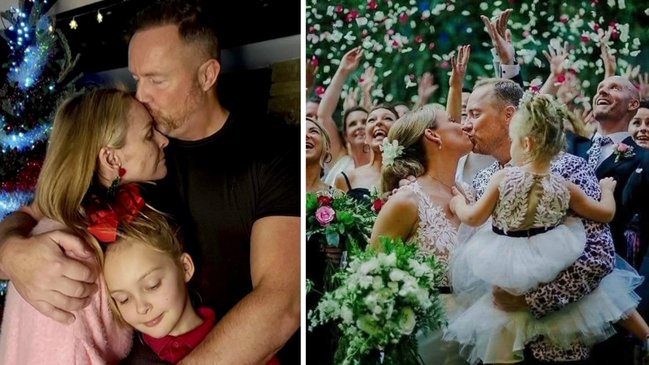

While the shock of losing a loved one can be all-consuming, grief often resurfaces most intensely during birthdays, anniversaries and other major milestones.
Australian clinical and forensic psychologist Denise Cullen says for people navigating grief, these days can transform from seasons of joy into periods of profound emotional vulnerability.
“If you’re finding that the holidays hurt, or that certain dates like anniversaries and birthdays are especially difficult, you’re not alone,” Cullen said.
Know the news with the 7NEWS app: Download today
Since Australian TV star Mel Schilling’s death, her husband Gareth has spoken openly about the immense loss, as he shared the heartbreak of marking what would have been their eighth wedding anniversary without her.
The dating coach, who featured on reality series Married At First Sight, died in March at the age of 53 following a brave battle with cancer.
Four months after saying goodbye, Gareth posted a touching tribute to his late wife on Instagram to mark what would have been their eighth wedding anniversary.

“Hard to reconcile that the anniversary of the happiest day of my life could become one of the saddest,” Gareth shared in July.
“We didn’t quite make 8 years married or 15 years together but what a love and what a life we had!”
Anniversary reactions are the natural emotional and physical responses that surface around meaningful dates, Cullen explained.
“While often discussed in trauma contexts, this phenomenon helps explain why grief intensifies during certain seasons or on specific dates,” the psychologist added.
Cullen has set out some strategies that can help people navigate grief after loss during anniversaries and special milestones.
Set realistic expectations
It’s important to set expectations early. Remind yourself that certain holidays, events or anniversaries will likely be challenging.
This might look like permission to scale back or modify your participation in traditional activities.
Store-bought pies instead of homemade, a more intimate gathering instead of a large party or skipping certain events entirely are all valid choices during grief.
Plan for triggers
Anticipatory planning can reduce the overwhelming nature of grief triggers.
It’s worth identifying possible triggers ahead of time. These might include specific gatherings, songs, decorations or dates and developing a Plan B for managing them.

Embrace the dual process model
The dual process model of coping with bereavement underlines that healthy grieving involves moving between loss-oriented activities (directly confronting grief, processing memories) and restoration-oriented behaviours (engaging in distracting activities, focusing on present-moment tasks).
To successfully navigate a period of grief, it’s important to engage in both.
Maintain connection through community
Social support is crucial. Don’t underestimate the power of being honest about your struggles with your trusted inner circle.
It’s OK to respond to inquiries with something like “I’m finding this time really difficult” as it can open space for genuine support.
Authentic connection regulates the nervous system and helps reduce the stress hormones that tend to spike during grief reactions.

Practice self-compassion and physical care
Grief is exhausting on every level.
This makes self-compassion and self-care particularly important during high-stress periods like holidays.
Aim to get adequate sleep, eat nourishing food, engage in gentle movement, limit alcohol consumption and moderate your exposure to screens and social media.
Honouring the past while building the future
One of the most meaningful ways to navigate grief during holidays and anniversaries is through the intentional creation of new rituals and traditions.
You don’t need elaborate rituals to honour someone you’ve lost.
Often, the most meaningful traditions are the simplest: lighting a candle at dinner, setting an empty place at the table, sharing a favourite memory, cooking their favourite meal or making a donation in their name.
These small acts can provide comfort while keeping their memory close.
Rather than trying to replace old traditions, consider adapting them to include your loved one.
Creating a memory book, buying a special ornament each year or wearing their favourite colour are all ways to maintain that connection.
It’s also important to remember that grief isn’t linear — what feels comforting one year may feel too difficult the next, so allow traditions to evolve over time.
The first holidays, birthdays and anniversaries after a loss are often the hardest.
Keep expectations low, whether that means celebrating quietly, travelling somewhere new, volunteering or simply focusing on getting through the day.

When to seek professional support
While grief is a natural response to loss, sometimes the pain becomes so overwhelming that daily functioning suffers.
Consider reaching out to a professional if you’re unable to complete basic daily activities, you’re relying on substances to cope with emotional pain, your physical symptoms are severe or persistent, your grief symptoms haven’t decreased after a year or you’re experiencing persistent thoughts of self-harm.

