



Taiwan has sat at the centre of one of the world’s most sensitive geopolitical flashpoints for years.
China and Taiwan have long held differing views over the island’s status, with Taiwan today functioning as a democratic society.
However, military exercises, diplomatic disputes and frequent headlines have fuelled concerns about what the future may hold.
Know the news with the 7NEWS app: Download today
But when you step onto the streets of Taipei, that uncertainty feels a world away.
The Taiwanese capital is vibrant and welcoming, with bustling night markets, incredible food, efficient public transport and easy access to hot springs, hiking trails and picturesque mountain towns.
When I was looking for somewhere to break up the journey between Sydney and London, Taiwan quickly rose to the top of my shortlist.


At just nine hours from Sydney and 14 hours onward to London with China Airlines, it made for an ideal stopover. Beyond news headlines, however, I knew very little about the country.
So I decided to spend four days finding out what Taiwan is really like.

Taipei: A city that feels surprisingly under the radar
If you’re searching for an alternative to Japan, whose most famous attractions can now feel overwhelmed by tourists, Taiwan deserves serious consideration.
Taipei is remarkably easy to navigate thanks to its MRT train system and frequent buses connecting every corner of the city. You can pick up an EasyCard at convenience stores, and unlike Sydney’s rather plain Opal card, many come in surprisingly cute designs that make them feel more like a souvenir than a transport pass.
Around almost every corner you’ll discover something enticing, whether it’s the aroma of street food, an ornate temple tucked between buildings, or a lively shopping district.
What stood out most was how under-travelled it felt by Western visitors.


Popular destinations such as Beitou Hot Springs, comparable to Japan’s Hakone region, and the mountain village of Jiufen were busy but nowhere near as crowded as equivalent attractions elsewhere in Asia.
The locals were unfailingly polite and welcoming. Unlike some famous markets around the world, like the souks of Marrakech, vendors weren’t urging you to buy the wares.
And then there’s the food.
Come for the sights, stay for the food
Taipei’s night markets are a sensory overload in the best possible way.
Pepper buns baked inside clay ovens, sweet Taiwanese sausages, soup dumplings, sweet potato balls and endless varieties of seafood and snacks compete for your attention. Even if you’re not hungry when you arrive, the aromas make it almost impossible to resist.
Taiwanese cuisine reflects influences from both China and Japan while maintaining a strong identity of its own.


The country also lays claim to being the birthplace of bubble tea, and milk tea is practically a national institution. Unlike Japan’s strong drinking culture, Taiwan’s most popular social beverage is often a cup of sweet milk tea filled with chewy tapioca pearls.
If language barriers worry you, don’t let them.
Most signs and menus are written in Mandarin, but Google Translate makes travelling remarkably easy. Photograph a menu, translate it instantly, and point to what you’d like to order. Better still, embrace a little uncertainty and order something unfamiliar.
Some of my favourite meals came from doing exactly that.

Where to stay
I based myself near Ningxia Night Market at City Suites Taipei Nanxi because of its proximity to Taipei Main Station and Zhongshan MRT Station.
The room didn’t have a window, but for less than $100 a night it was excellent value.
I’d strongly recommend staying near Zhongshan. The station sits on multiple MRT lines, making it easy to explore the city, while the surrounding area is packed with cafes, restaurants and shopping.


For souvenirs, Eslite Spectrum Nanxi is well worth a visit. The upper floors are filled with Taiwanese teas, specialty foods and locally made gifts. I picked up several packets of oolong tea and one of the colourful reusable shopping bags commonly carried by locals, among other quirky bits.
The area between Zhongshan and Shuanglian is also home to stylish boutiques, jewellery stores and independent retailers.
The Taiwanese meals worth planning your trip around
The standout meal of my trip was a bowl of beef noodles from Michelin-starred Lao Shan Dong Homemade Noodles.
Hidden inside the lower level of a shopping centre, the restaurant serves rich, deeply flavoured broth packed with tender beef and slightly chewy handmade noodles. My recommendation is the half beef, half tendon noodle soup with a side of smashed cucumber salad and a generous spoonful of chilli butter.
For around $10, it was one of the best-value meals I’ve ever had.


Not every famous food destination lived up to the hype.
Fu Hang Soy Milk, one of Taipei’s most viral breakfast spots, required a queue of almost two hours. While the salty soy milk soup and sesame flatbread stuffed with Chinese donuts and eggs were good, there are plenty of smaller local venues serving similar food without the lengthy wait.


Din Tai Fung, on the other hand, justified the queue.
Originating in Taiwan, the restaurant remains one of the country’s most famous exports. The xiaolongbao soup dumplings were exceptional, while the spicy shrimp and pork wontons, pork chop fried rice and stir-fried sweet potato leaves rounded out a memorable meal.
Arrive hungry and be prepared to leave full.


For night markets, Raohe was my favourite. Its famous pepper buns are worth the trip alone, while the avocado milk and stinky tofu ended up being some of the trip’s most surprisingly enjoyable discoveries.
Another must-try is Taiwan’s famous sweet potato balls: bouncy, crispy snacks repeatedly compressed in hot oil until they puff up before being dusted with plum powder.
If you’re unsure where to start, consider booking a food tour. I joined one through Ningxia Night Market and nearby Dihua Street, where we sampled everything from pork blood sticks and a classic pork mince rice dish to one of Taiwan’s most unusual snacks: pineapple ice cream wrapped in coriander, crushed peanuts and a thin rice-paper sheet. It sounds bizarre, but somehow works.
At Shilin Night Market, keep an eye out for the famous Taiwanese fried chicken stall serving crispy flattened chicken breasts that are almost the size of your head. It is impossible to miss.


And of course, you should take every opportunity to drink bubble tea. My favourite was a classic milk tea with brown sugar tapioca pearls from 50 Lan, while the most memorable was a black tea topped with avocado foam from Daming. It sounds unusual, but like many Taiwanese food experiences, it was surprisingly addictive.
Where to visit in Taipei
One of the most memorable day trips was Jiufen, the atmospheric mountain town often linked to Studio Ghibli’s Spirited Away.
Whether or not it truly inspired Hayao Miyazaki’s masterpiece remains debated, but it’s easy to see why the comparison persists.
Red lanterns illuminate narrow laneways lined with tea houses, restaurants and souvenir stores perched on a hillside overlooking the coast.


I spent an afternoon wandering Jiufen’s winding laneways, sampling taro ball desserts and fish ball soup before settling in for a tea-tasting experience.
I’d recommend Jiufen Teahouse, where I drank 10-year-old oolong tea and learnt about the rituals and traditions behind Taiwanese tea service. The experience is wonderfully unhurried, and best of all, you’re able to take home any tea leaves you don’t use.
Some travel guides recommend skipping Jiufen because of the crowds, but arriving just before sunset lets you avoid the busiest periods while catching the lanterns flickering to life across the hillside.
For a slower pace, Beitou Hot Springs is less than an hour from central Taipei.

The district’s thermal waters have been popular since the Japanese colonial period, and after days spent walking through Taipei, a soak felt deserved.
I visited Long Nice Hot Spring, a simple, inexpensive bathhouse frequented mainly by locals. A Taiwanese woman also recommended VILLA 32 for a more upmarket soak if that’s what you prefer.
If relaxation is high on your agenda, Taipei won’t disappoint. The city has countless massage parlours offering everything from quick foot treatments to full-body massages.
One of my favourite experiences was at 不老松足湯新生行館, where the session began with a soothing foot soak before a 90-minute massage that worked through all the knots accumulated during a long-haul flight. After days spent exploring Taipei’s streets, markets and hiking trails, it was exactly what I needed.
Nature lovers should also consider Yangmingshan National Park, which offers volcanic landscapes, grassy hills and a network of walking trails just outside the city.


The park is home to Mt Qixing, Taiwan’s highest dormant volcano, where hikers are rewarded with sweeping views across Taipei and the surrounding mountains. If you’re not up for the climb, there are plenty of gentler walks through rolling grasslands where water buffalo can be spotted grazing.
Make sure your MRT card is topped up for the bus trip to Yangmingshan or you’re carrying coins for the fares.
Back in central Taipei, don’t miss Lungshan Temple or the National Palace Museum, home to one of the world’s largest collections of Chinese art and artefacts.
And before leaving, make the climb up Elephant Mountain.
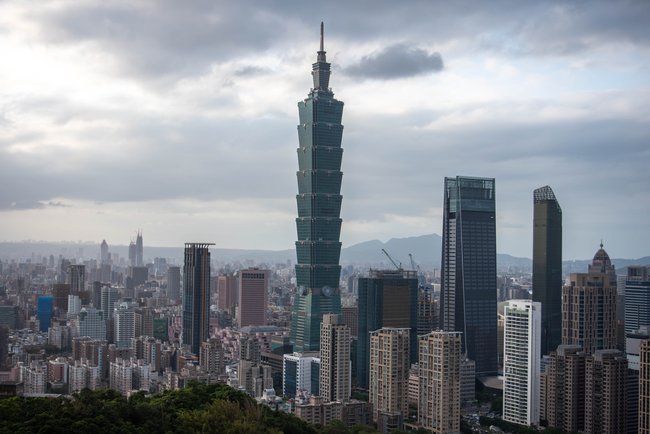
The short but steep walk rewards you with sweeping views over the city and Taipei 101 rising above the skyline. Just remember to bring mosquito repellent.


